Thursday, March 14, 2013

This 'n That and 21.3%

This... I guess it's about time I checked in with y'all. Yep, I'm still alive and kicking but those Hoffman folk have taken over my research... I now have a pretty good idea of the meaning behind that ancestry.com slogan "You don't even have to know what you're looking for... you just have to start looking." Of course, it does help to have a few "clues" to start with. But in the past three months I've added nearly 500 descendants of John and Catharine (Coy) Hoffman to my Legacy database! And yes, they are sourced... but not necessarily in the "ESM" style.


It had been quite a while since I had gone looking for "more recent" relatives and I do love how ancestry.com gives those hints along the right side of the screen after you've found someone in a census or other record. Sometimes there are lots of those hints and other times not so many. Of course, you still need to be able to determine if the hints are really for the person for whom you are looking. But, my goodness, it's so much easier now than it was, oh, 20 years ago!


'n That... Research is on hold for now. I left Indiana last week to come to Huntsville, Alabama to help out my friend/distant cousin (3rd cousin once removed in the Joslin line) while she is recovering from cancer surgery. Recovery from the surgery has been very good but she's had a terribly painful flare-up of rheumatoid arthritis in her hands and shoulders. Then her left knee started swelling up and has been quite painful - that's been diagnosed as osteoarthritis. After visits to several doctors yesterday and today, medication has been prescribed that will, hopefully, ease the pain. After she recovers from the surgery she will have 5-6 more rounds of chemo to blast away the remaining cancer. So, if you'd care to add Babs to your prayer list, I'm sure she would appreciate it.


and 21.3%... I'm a little behind on blog reading but I saw Judy Russell's post More Lost Than Found and Randy Seaver's Saturday Night Genealogy Fun challenge and, though a little late, thought I'd see how I measure up. Like Judy, I've got far more ancestors missing than I've found, but overall, not too bad. Things look good for the first four generations, but starts dropping off at the fifth.


I'd be quite pleased if I could locate the six missing 3rd Great Grandparents, but they are back in the "old country" of Switzerland or Germany and I haven't a clue really, as to which little town from whence they came.


The missing 3rd Great Grandparents:


  • Parents of Charles Wiseman (1815-1895) born Switzerland, died Switzerland County, Indiana

  • Parents of Michael Fisher (abt 1800-1845) born Germany, died Carroll County, Ohio

  • Parents of Christena Houck, wife of Michael Fisher, (abt 1805-after 1850) born Germany, died unknown


And, if I could find the elusive parents of Ruth Dyer, Sally Church, and Abigail Price they would surely fill in some of the empty spots!


Tuesday, March 12, 2013

Crampons...Mono points/ Dual points


Two 2 winter's ago, I was scratching my way up a couple of pitches of moderate mixed at the end of a long walk.

I kept thinking at the time just how really hard the same two pitches would have been in my "other" gear.

The "other" gear would have been dual horizontal front points, much more supportive boots and a set of ice tools that would likely be much more appropriate for the majority of the climb.


Climbing on the last two pitches wasn't very hard, but consistent, and maxed at M 4 or 5. Way more rock climbing than ice. As there just wasn't much ice to be had beyond some nice scabs plastered here and there. So the tools were hooked on rock and the mono points set in a combination of rock or ice. Vertical granite cracks and blocks were abundant so it was easy to slot the single front point. The ice placements I did get for my feet typically sheared out with only the one set of points for support and I ended up on rock anyway.

When it came to climbing the last 30m of the open book it was all rock. Even with the best gear for that particular job it was difficult enough for me. With my "other" gear it may well have been more than I bargained for.

Daniel Harro photo


My point? In this instance a set of Nomics and Darts matched to the easy ankle flex in the older La Sportiva "Ice" made a lot of sense. No question the combo of the three made the climbing much easier. Funny how it turned out as I wasn't worried about the climbing just wanted easy boots to make the 15 mile hike in and didn't want to carry much weight. Turns out all three were a good choice on a iced up rock climb.

I used a similar thought process on another climb last winter were I took a set of Dartwins. 2000' of ice this time, most of it moderate WI4 or less. Two things I noticed besides having a lwt weight set of foot wear. ('pons and Trango Extreme Boots)

The first was the vertical front points of the Dartwins sheared through a lot on the warmer ice.

By mid day it was becoming irritating how careful I had to climb because of it. I would have much preferred a set of BD Sabertooth crampons at that point. And stripped they would have been even lighter than the Dartwins. (which come stripped)


Darts alone on this particular climb, that day, would have REALLY sucked in comparison to either the Dartwin or Sabertooth. I would have been forced to do a lot of French technique on the mono point Dart that is already notorious for having loss a set of down points. More akin to roller skates at that point than a set of Sabertooths.

In the world of ever more specialised equipment it pays to really look at what you are using, when, why and where.

I saw a comment earlier today where a very good climber was forced while following to aid and French free 30 meters of difficult rock, the same 30m that the leader had freed with mono point 'pons. The reason it wasn't freed was climbing on dual front points. The dual point 'pons simply couldn't be slotted into the finger crack.

For the remaining 500m of easy alpine ice that they simu climbed above the finger crack the Darts would have been fine and no real disadvantage over the dual points.

Another point recently made to me. If you weigh 150# in full winter kit it is a lot less likely you'll be shearing vertical front points than if you weigh in at a full 200# plus kit. I'm no fly weight. Never have been and realise I putt more stress on my gear because of it so I tend to notice the small things a little sooner where others might not.

I am comfortable with both styles of 'pons in my quiver but I also look at where I want to use them and why. If I had to chose I would ditch the monos.

Wednesday, March 6, 2013

Bells Are Ringing, Car Doors Flinging... Holiday Time in the City

Just as I start to think of myself as a seasoned transportation cyclist, something happens to throw me off my game. Yesterday I had one of the most stressful rides ever. It was a 10 mile route out to the suburbs that passed through several town centers. Despite it being the middle of a work day, traffic was unbelievable and I kept trying to figure out what was going on. Then it hit me (almost literally - as two car doors swung open simultaneously directly in front of me and a pedestrian jumped into my out-of-the-doorzone line of travel at the exact same moment): It's holiday shopping time and people are on their lunch breaks.


Don't get me wrong: I am glad to see so many shoppers patronising establishments in their local town centers instead of going to the mall or shopping online. I've heard campaigns on the radio promoting local holiday shopping, and I am certain that I am seeing more of this trend now than in previous years. The lively community feeling seems to be returning to places where it had been absent for years; it's fantastic. But assuming that most of the holiday shoppers are indeed local (why else would they visit tiny stores selling things like bespoke stationery, knitting yarn, baby clothing, and jewelry crafted by women who teach at the local arts center?) it is ironic that they choose to drive. Parking alone must eat up a good portion of their lunch hour, which probably explains why they run in and out of the shops like mad, swing open their car doors without looking, then shout in irritation at cyclists like me merely for being there and almost getting killed by them. They would probably be happier if they walked, as would the rest of us. I know that some town centers have considered banning parking or car traffic during peak shopping times, but there is resistance from business owners - who believe this will deprive them of customers.


Anyhow, I write this not so much to complain, as to warn those who are new to cycling during the holiday rush: Be careful out there and take alternative routes if possible. After almost getting doored for the nth time, finally switching to a trail for the last portion of my return trip was a welcome relief. Peace and quiet and dirt and gravel and no swinging car doors: I'll have that on the rocks, please. And I'll walk or ride to do my holiday shopping.

Monday, March 4, 2013

The Paradox of Long Rides

Diri-going

Since describing my overnight ride to Maine last week, I've received an unexpected amount of correspondence from readers who feel drawn to long bike rides, but aren't sure they can handle them physically. The only other time I've had such a volume of email, was after my 100 mile ride along the Danube last Autumn - a similar theme. There is considerable interest out there in long distance cycling among those who love bikes but are not necessarily athletic.


Here is an excerpt from an email from Barbara that sums up the sentiment nicely:


"...[I am] not a strong cyclist, but I just loved your description of riding to Maine in the moonlight. I want to do a ride like this so much, it makes me want to cry! Can the weaklings among us experience a similar journey, or am I a hopeless romantic?"


This resonated with me, because it pretty much expresses my own point of view. I love the idea of covering long distances by bicycle, of experiencing beauty and adventure along the way,of bonding with companions as our wheels hum and our headlights illuminate the road. In my imagination, I do not envision this as an athletic activity or an endurance event. Ideally, it would be just a very long bike ride.


And therein lies the paradox: Yes, it is possible to experience long distance cycling from this perspective. But in order to do so, we have to get to the point where we are strong enough, so that a 100+ mile ride feels like a fun adventure and not like a physical feat we've just barely managed to survive. And this, in turn, means working up to it and getting in shape for it.


How is this different from just riding? I suspect there is more than one answer. But the way I interpret it, the crucial difference is that the rides are more structured - with the goal of building up miles, speed, and time in the saddle. Prior to last summer, I never followed any kind of structure, hoping that my endurance and handling skills would just build up organically, inspired by the joy of riding alone. I am sorry to say that this did not happen. Only when I started taking part in club rides,met experienced riding partners,and adapted a more focused approach, did I undergo significant improvements. The structure and discipline changed my body, ultimately giving me more freedom. This may not be the path for everyone, but I am being honest about what it's been like for me.


While the readers who contacted me about long distance riding did so seeking some form of insight, it was in fact I who ended up gaining insight from them; insofar that they helped me recognise this contradiction. I am sometimes asked what my goal in roadcycling is. And I think that my goal, if any, is to get to the point where riding long distance is entirely about the journey and the scenery, not about overcoming physical limitations. But I am willing to work on overcoming those limitations in order to get to that point.

Friday, March 1, 2013

Braking: Not Always Your Friend

The other day I was cycling on a busy road where the city has recently installed those raised-platform intersections to make the cars slow down before crosswalks. Ahead of me, I saw a cyclist brake just as she entered the intersection - probably hoping to reduce the impact of the bump. Watching her, I somehow knew what was going to happen next and winced. And then it happened: As her wheel hit the raised platform, her bicycle flipped over, and she with it. All this occurred at a slow enough speed, so that she wasn't hurt and was soon back on the bike. But I suspect that she has no idea why the fall happened, which means that it might happen to her again.

To me, it has always seemed self-evident that it is "bad" to brake while going over bumps, and watching the cyclist's fall confirmed that. But were there actually any facts behind this belief? I got home and looked it up, stumbling upon Sheldon Brown's explanation.
Bumpy surfaces. On rough surfaces, your wheels may actually bounce up into the air. If there is a chance of this, don't use the front brake. If you apply the front brake while the wheel is airborne, it will stop, and coming down on a stopped front wheel is a Very Bad Thing.
Okay, that makes sense. It has also since been pointed out to me that braking transfers the weight of the bicycle forward, so braking on the bump drives the front wheel right into it. Makes sense as well. So, we essentially have two forces working against us when braking over a bump.

When we find ourselves hurdling towards an obstacle n the road that we cannot avoid, naturally the reflex is to slow down. But this should be done before going over the said obstacle, not during. Braking is your friend, but only when done correctly (brake before the bump, then release before going over it). I would also venture to say that most casual cyclists who use handbrakes do not differentiate between front and rear.

Of course, this is just one more reason why I love coaster brakes for cycling in the city. If you're used to braking with a coaster brake in order to slow down, you do not rely on the front brake as much and are not likely to squeeze it while going over a bump. I know that some will not agree with me on that one, but that is how I see it, and the coaster brake has been a reliable ally for me in pothole-ridden Boston Metro.
More recommendations

There is always a Friday Ark over at The Modulator - go there for links to critter pictures of the week. And if you've got a blog, be sure to submit your photos too.

And then there's Caturday, a newish blog about - cats, what else! They were nice enough to include one of my recent pictures.

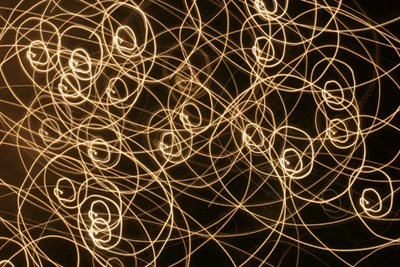
I know, I know, I need to update my blogroll! In the meantime be sure to check out the Firefly Forest Blog. Besides the great nature pics, I enjoyed the recent Light Trail Photographs:


And thanks so much to Gnumoon for letting me know about Pandora. You can create your own online radio stations, and "train" them to play what you like, based on your own recommendations. I'm currently building:

Karen's Alternative
Karen's Folk
Karen's Bluesy
Karen's Minimalism
Karen's Alt Country

and several more. You can build a station based on just one artist or song, or list several for an interesting mix.