New England Coastal Town X. You know the one. Narrow streets, saltwater marshes, dog-rose bushes. Windswept rocky beaches, icy currents. The natives distinguished from the tourists by their accents, the age of their boat shoes, and their ability to go in the water (watah) without flinching. Dilapidating beachfront properties, clung to for generations before ultimately being sold because money's run out or the siblings can't decide who keeps the house.
The developers from the Cityare good guys,thank God, not at all like those soulless predators who would have entire blocks of historical properties bulldozed for condos. Worshipful of the town's character, they only want to update, to improve. They landscape with native plant life (they've researched this; it looks natural and wild yet subtly colour-coordinated).Gingerly and respectfully they extract Jesus and Mary statues from front yards. They remove asbestos, replace yellowed wallpaper, tear down drop ceilings to expose natural beams, liberate hardwood floors. They gut those claustrophobic interiors with their myriads of tiny rooms to create an open concept layout. They install granite kitchen counters, stainless steel appliances, add extra bathrooms (really, a 6-bedroom house with 1 bath?...).
The updated properties are resold at prices that reflect the quality of labour, the professionalism of the interior design and the local sourcing of materials. They are bought by urban escapees. Eager to live in the quaint town for a fraction of the cost of their cramped city apartment, they long to improve their quality of life with fresh air and natural beauty and a sense of community. But the economy is terrible, and their ideas of local employment opportunities prove over-optimistic. Two years later they return to the City, keeping the property as a summer house and income-generating vacation rental.
A tiny commercial street runs through a narrow peninsula. It is home to 6 ice cream shops and 5 seafood restaurants, every single one of them with water views. The seafood is freshly caught, the ice cream home made. "There's a line, but it's worth it." A woman wearing a white beach dress and straw hat asks the high school girl behind the counter if the scallops are good. Unthinkingly the girl answers that she hates seafood, then laughs apologetically and promises they are excellent. The woman asks the girl where she is from. She replies that she lives down the road, pointing in the direction. The woman is ecstatic as she carries her food away to the outdoor seating area. She tells her husband about the exchange. "You know they're locals if they hate seafood!"
Around the corner is a string of cozy little shops selling locally made jewelry, fair trade clothing from South America, organic hand lotions, antique furniture, used books. The local Art Association operates a Co-Op. Paintings, ceramics, woodblock prints. A hand-holding couple discusses purchasing an abstract seascape. "I want the lighthouse to be recognisable without the whole thing being cheesy, you know?" They study several pieces that meet these criteria, tilting their heads.
There is a yoga studio, a book club, a historical society, a concert hall, a market stall selling fresh produce thrice a week on the Green. Artist residencies are held on a bi-monthly basis. There is a mannerism and style of dress that distinguishes the seasonals from the more casual vacationers and day trippers, establishing a hierarchy of sorts.
And then there are the locals, that elusive species. They work the counters, staff the hotels, rent out the boats. But mostly, those who remain are like ghosts. Sometimes you hear the accents at the beach, or a voice calling a child in "for suppah" from an open window.
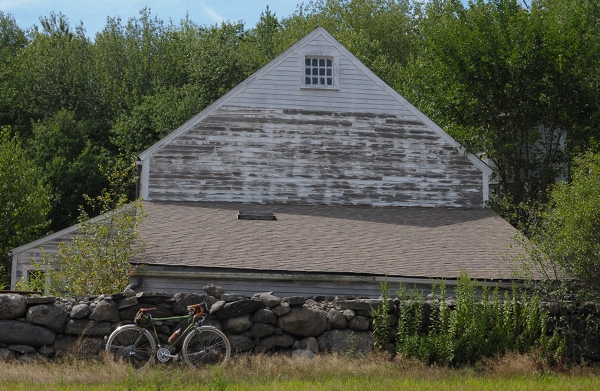
New England Coastal Town X. I've lived in one and I've visited many, and now here I am again. Memories blend with images glimpsed from afar as I ride my bike past the rocky beaches, charming shops and impeccably renovated properties.

 Though not all will agree with this, I believe that in order to honestly say that you areableto cyclea given distance, it has to mean that you are able to do itsuccessfully. In other words, if you managed to complete a long ride, but could not walk the next day as a result, that does not count as "success"!
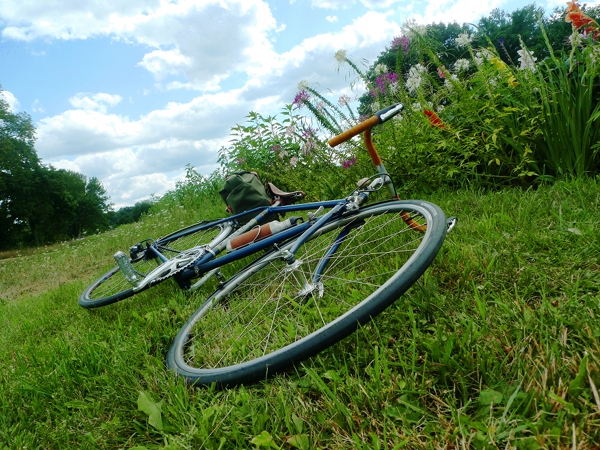 I consider my first half-century (50 mile) ride to have happened this summer - despite having once cycled that distance in Austria some time ago. That earlier trip was a disaster, and I wish somebody had warned me against it. Emboldened by having gone on a handful of short rides, one day I just kept going and going - and didn't stop despite feeling discomfort and pain. Riding a rental bike with a plush vinyl saddle and sub-optimal geometry, I pushed myself well past my limits, ignoring my body's warning signs. And after the ride was over, I could not cycle for over two weeks.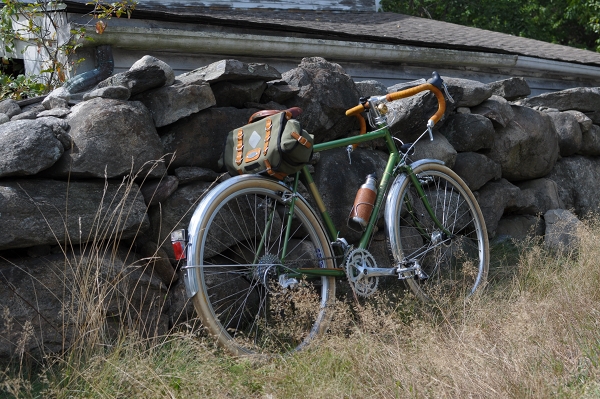
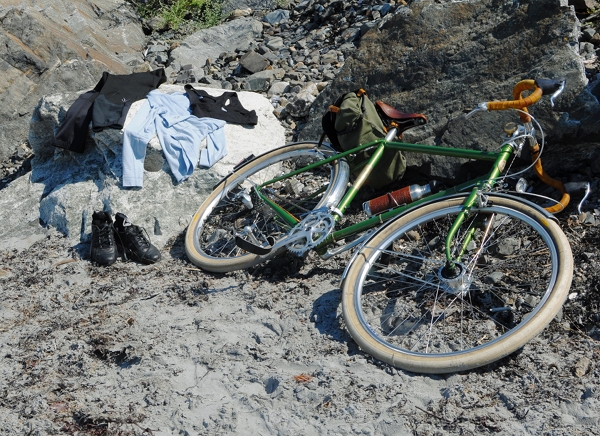 3.Make informed and practical clothing choices.The very same pants that feel great on a 10 mile ride, can make your crotch bleed by mile 50 - as the seams begin to chafe against the delicate skin in that part of the body. By increasing distance gradually, you will be able to spot problematic tendencies before they turn into actual problems and cause damage.
 4. Consider terrain. A hilly ride is far more difficult than the same distance covered on flat terrain. You may be perfectly capable of completing a 50 mile ride in Kansas, yet find it impossible in Vermont.
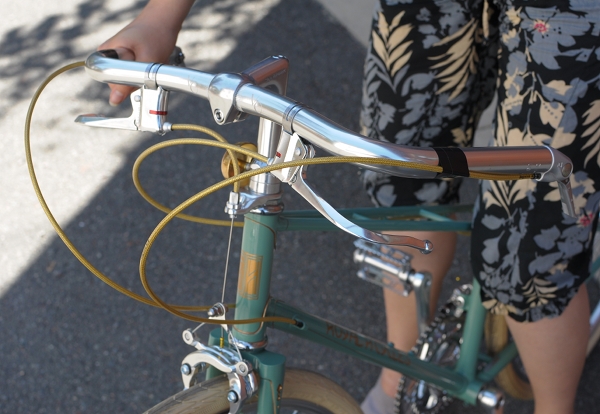 6. Expect to make adjustments to your bike, and possibly replacements. If something does not work for you, admit it and do something about it. This may include replacing components such as your saddle, handlebars, grips, gear shifters, etc. - or even your bicycle itself. Sometimes we read great reviews of things, and yet these things turn out not to be right for us. Get something that works foryou.
 7. Eat and drink. Cycling can suppress your appetite and trick you into thinking that you are not hungry... until you crash and find yourself completely unable to continue. This weird phenomenon can really sneak up on you. If you are going on a long ride, make it a point to snack when you take water breaks. Some people like energy bars and energy drinks, while others believe them to be unhealthy. I prefer trail mix or chocolate to energy bars. And adding some lemon juice and (a pinch of) salt to your water bottle makes for an effective, all-natural electrolyte replacement drink.
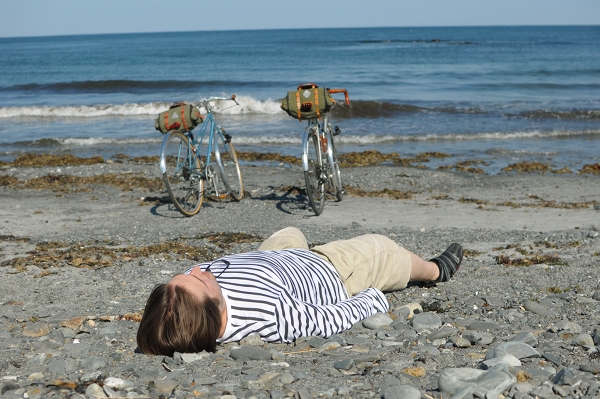 8. Most importantly, listen to your body and go at your own pace. Have realistic expectations and be patient. So you envisioned yourself crossing the Alps this summer, yet you can't manage more than 20 miles on your local rail-trail? So what! Enjoy those 20 miles and keep doing them over and over. One day you will surprise yourself.
 Mono Lake near the town of Lee Vining in east-central California.October 11, ..
 For starters, we had grilled octopus on a toast and I had smoked salmon with almond on a toast as well. Blondine's other starter was a sardine (not in foto).
 Paired with fresh special sorlut oysters and a glass of chilled chardonnay. Blondine had another toast with ham on top as well (not in foto).
 Yours truly, the glutton.
 We walked to the seafood stand and ordered a plate of grilled octopus sprinkled with paprika and sizzled with extra virgin olive oil. Blondine and I shared this.
 After our chardonnays were done, we decided to go red. This time a Rioja.
 We ordered the Rolls-Royce of all Spanish ham, the bellota. Here is the server busy carving our bellota ham.
 Bellota means acorns because these select swines are only fed with it. This is just heaven. 100 grams costs almost 20 Euros. We shared this as well.
 For my dessert, since I am not a sweet tooth type, I settled for an olive wrapped with an anchovy and topped with green pepper.
 Getting there was the more challenging part, because large chunks of the route are uphill. We hadn't realised it before, but the Charles River Trail - though overall longer - avoids many of these hills, while the vehicular cycling route takes you right through them. No matter what anybody says, I do not recommend a heavy upright bicycle with limited gearing on hills for long distances, unless you have the stamina and leg strength of a hardened cyclist. The hills were bad enough, but the hills plus a killer headwind nearly did me in. I did make it though - soaked with sweat, bright red in the face, and without a clue how I was going to get the energy to cycle back! Oh, and Harris Cyclery was closed - we hadn't realised that their winter hours were 6 days a week only.
 Thankfully, the sandwich place down the street was open, and we secured a table with a spectacular view of our bikes, partaking of their refreshments until I could muster up the strength to ride back. The return trip was considerably easier, though there were still some uphill patches.